






background

Juicy Fruits Slot Review For Netherlands

In 2026, get to know Juicy Fruits in the Netherlands: demo, stakes, pace, limits and payouts, with a focus on conscious play.

Juicy Fruits
Juicy Fruits

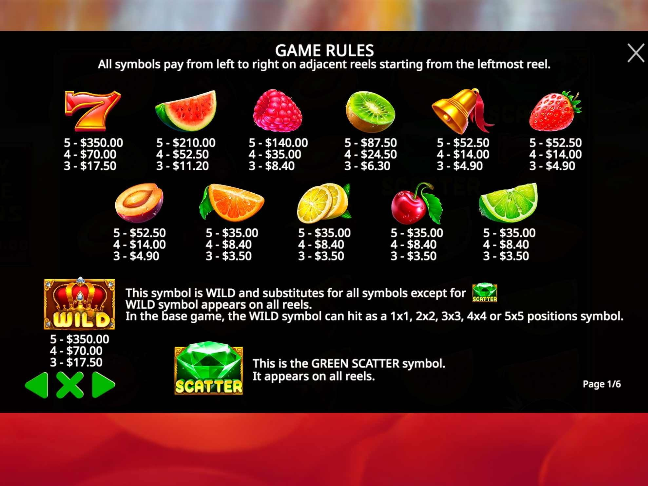
What Juicy Fruits RTP Means For Your Session

The payout percentage is a useful compass, but not a promise for your next spin. See it as a theoretical ratio over many rounds: it says something about the design, not about your short session. In practice, variance mainly determines how “choppy” your balance moves: sometimes you get frequent small repayments, sometimes long dry spells with an occasional peak. That's why it's better to plan your session around pace, stakes, and breaks than around a single number.

Imagine playing “just ten minutes” on a quiet evening and your balance drops faster than you expect. Usually, this is not because you are doing something wrong, but because short sessions are inherently volatile. If you accept that beforehand, you will make fewer impulsive jumps in stakes and stick closer to your plan.

All promotional incentive structure is clearly stated in writing and/or via electronic means in an easily understood manner. All codes are accompanied by an explanation of what the code is for, who is eligible to use the code, and how it should be used. As such, players are less likely to be confused about what is required of them in order to receive a reward and how the reward will be applied after receiving it. The promotional incentives provided to participants provide them with time to become familiar with the gaming system's mechanics, their interface, and progress, before deciding how deeply they wish to become involved with this platform. Therefore, players are encouraged to participate in an informed manner, rather than being pressured or tempted to act quickly.

reviews image 1
Juicy Fruits

Top casinos for playing Juicy Fruits — current list

ALF Casino
ALF Casino
Mafia Casino
Mafia Casino
LeoVegas
LeoVegas
Juicy Fruits Betway
SG Casino
Juicy Fruits Betano
Retro Bet
Juicy Fruits

Juicy Fruits Review: What To Look For In 2026

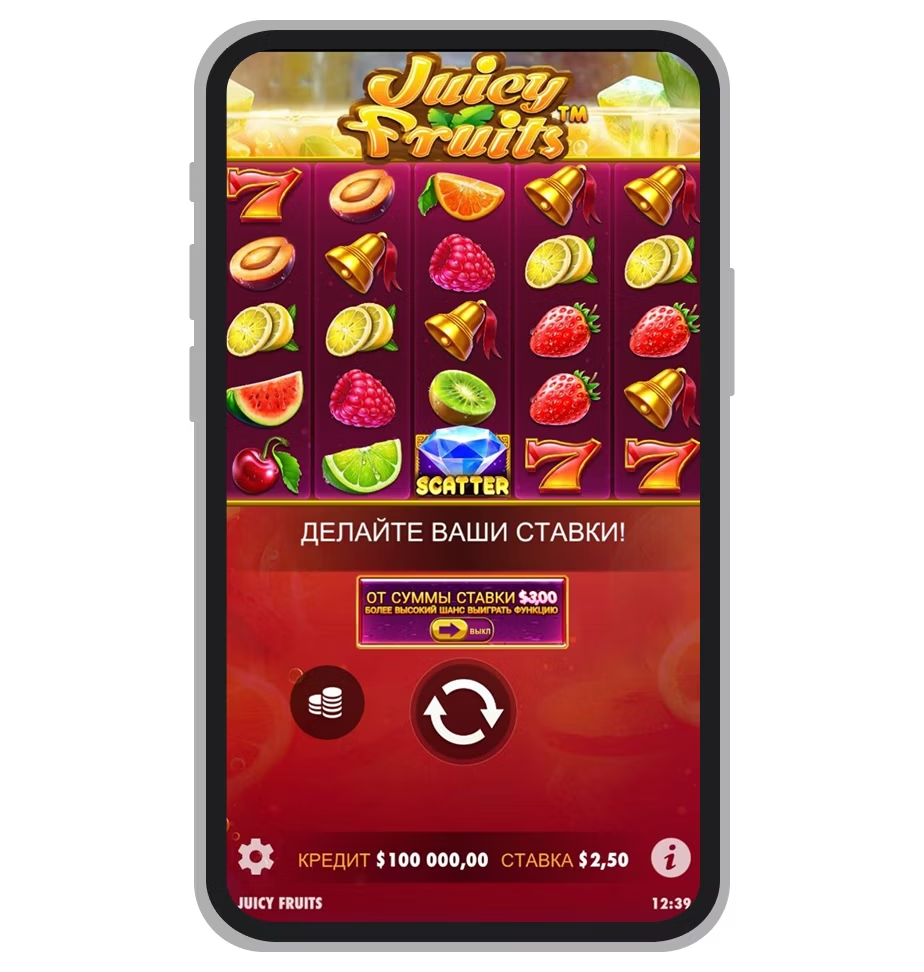
A good review doesn't start with opinions, but with observations: what's happening on the screen, how clear are the buttons, and what choices do you get as a player? Pay attention to readability (symbols, win notification, balance), to the flow (how quickly a round starts and ends) and to the moments when the game tries to do "something extra". Some fruit slots direct you towards longer sessions through fast rounds and a lot of repetition, others feel slower but clearer. Also look at the practical side: can you quickly go back to settings, do you see your previous rounds, and can you slow down the pace if you notice you're clicking too fast.

If you're tired and still want to play, a simple test works. Usually, players first do a short trial series with a low stake to feel if they are still sharp enough. Imagine that after five rounds you are already impatient - that is often the signal to pause or postpone the session.

reviews image 2
Juicy Fruits

How To Start In Netherlands With Juicy Fruits

In the Netherlands, it is important that you play within the applicable rules and only if you are of legal age. Therefore, start with the basics: choose a provider that is clear about limits and account settings, set your playing speed comfortably, and make your first session an exploration instead of a performance. The best start is boring on paper, but calming in reality: you know where everything is before emotions take over.

Imagine you're just finishing your day and you want to try "one more game". Usually, things go wrong when players immediately go on autopilot. By first setting up settings and limits, you take the pressure off the moment and make your choices consciously.

Account And Settings Without Hassle

Complete your account step by step and take two minutes for settings that will save you time later. Think about language, notifications, biometric access on mobile (if you like that), and especially limits for deposits or playing time when available. Verification sometimes feels like a hassle, but it's smarter to complete it neatly before you ever think about a payout. Also maintain a fixed routine: log in, check balance, check limits, only then play.

If you're in a hurry, you skip exactly the parts that will frustrate you later. Imagine that after a fun session you want to cash out and only then realize that your profile is not complete. Usually, that costs more energy than arranging it calmly beforehand.

Choosing Your Stake And Setting Your Pace

Choose a starting stake that matches your budget, not your mood. A handy approach is to work with blocks: a series at a low stake to get a feel for the rhythm, then decide whether to adjust anything. Set your pace consciously: fast spins feel fun, but make it easier to forget your limits. If you notice that you're pressing "one more round" more often without really looking, slow down or stop.

Imagine you just saw a small win twice in a row and your hand automatically goes to "increase". Usually, that's when players lose their plan. By evaluating only after a fixed series, you maintain control and the game remains a choice instead of a reflex.

Quick Checklist For Your First Gaming Session

Set sound and speed correctly, review the game explanation, choose a low starting stake, and agree with yourself when you will stop (time or number of rounds). Also check if pause and limit options are easy to find, so you don't have to look for them later.

Common Mistakes You Correct Immediately

Starting too high, turning on autoplay without a plan, and "just depositing more" because things are going badly. Correct that with one rule: no changes in the middle of emotion. First a break, then a choice.

Juicy Fruits

Banking, Payouts And Limits In 2026

Depositing and withdrawing are not secondary matters, but the steering wheel of your session. Payment options can vary per provider, as can minimum amounts, verification steps, and processing time. Therefore, choose what suits your routine: a method you understand, that you can control, and that gives no surprises. Also think ahead: payouts are often stricter than deposits, so "I'll deal with that later" is rarely smart.

Imagine you're playing on a Friday night and you want to secure your balance immediately afterwards. Usually, it goes smoothly if your profile is correct and your method is logical, but it can also depend on extra checks. If you factor that in beforehand, you'll get frustrated less quickly and make better choices.

Component

What You Arrange

Why It Helps

Quick Tip

Deposit Method

Bank, card or digital wallet

Less doubt while playing

Choose one fixed option per session

Verification

Data and documents

Prevents blockages during payout

Arrange this before your serious sessions

Limits

Budget, time and loss limit

Makes stopping concrete

Set a limit that you truly accept

Processing control

Status and confirmations

Less stress during waiting time

Note time and amount for yourself

Pause tools

Time-out or temporary block

Helps with impulse control

Use it as soon as playing "should" feel

Deposit With A Plan Instead Of An Impulse

Treat a deposit as your starting signal and make it a one-time decision for that session. Determine your budget in advance and do not add anything later, not even "to come back". Always check if your bank still requires a confirmation and if the balance has actually been updated before you start playing. It sounds small, but it prevents the classic irritation of "why isn't it right?".

If you've had a busy day, topping up sometimes feels like a quick fix. Imagine that after a series of losses you think: "just one more top-up." Usually, that's exactly when players lose control, while a two-minute break can be enough to think rationally again.

Payout Without Surprises

Payout works best if you approach it as a process: first check profile, then choose method, then submit request, only then proceed. Take into account possible extra steps such as identity verification or limits based on your chosen payment method. If the status does not change immediately, do not go "back and forth" between game and cashier screen - that makes you restless and does not help.

Imagine you just made a profit and you want to continue immediately because you are in a good flow. Usually, it is smarter to first secure your payout or a part of it, so that the rest of the session is not driven by tension or greed.

Limits And Time-Out Tools You Actually Use

Limits only work if you don't see them as a punishment, but as an agreement with yourself. Set a budget limit that you can miss without regret, a time limit that suits your evening, and choose a stop rule for emotions: stop if you click faster, get irritated, or "must" win. Time-out or temporary block is not a drama, but a button for rest.

If you notice that you keep playing anyway, a simple scenario helps. Imagine describing your session to a friend: would you say you were in control? Usually, you feel that immediately, and that feeling is a good reason to use a pause tool.
reviews image 3

Juicy Fruits Casino Bonus Codes Activation Process

Juicy Fruits Casino Bonus Codes Conditions

Strategy For Pace, Bet And Rest

A strategy for a slot in 2026 is mainly a strategy for yourself: how you play, not what the game "gives you". Work with clear blocks, never change multiple things at once, and make stopping measurable. This way you build a session that you can repeat without it becoming an emotional roller coaster every time. The best players are often not the most optimistic, but the most consistent.

Imagine that after twenty rounds you see little return and your brain starts making stories: "now it has to come." Usually, that's when you need an extra rule, not a higher bet. Evaluating for a moment yields more profit than clicking through.

Budget Rules You Stick To

Choose one budget for the entire session and split it into parts, as if you are working with envelopes. Play your first part calmly at a low stake, and only use the second part if you are still clear and your rules still feel logical. The third part is optional and disappears if you already notice signs of frustration. This way you prevent yourself from putting "everything away in one go" without realizing it.

If you play with a small budget, temptation is extra great. Imagine that after a few losses you think that a higher stake will "take back" faster. Usually, it works the other way around: you make the swing bigger and you stop later, not earlier.

Using Autoplay And Speed Smartly

Autoplay can be useful for consistency, but only if you set boundaries around it. Use short series (e.g., a limited number of spins), enable win or loss stop if available, and consciously check balance and time after each series. Never turn on autoplay if you are doing something else at the same time, because then control disappears in minutes.

If you are sitting on the couch and your phone vibrates, distraction is close. Imagine that you turn on autoplay and read chat messages in the meantime. Usually, you only notice late that your session has changed from "conscious playing" to "checking afterwards", and that is exactly what you want to avoid.

When To Adjust Your Bet And When Not To

Adjusting your bet is a planned choice, not an emotional reaction. Agree that you will only change after a fixed evaluation: for example, after a set of rounds, or after a clear win that you first secure. Lower your bet when you notice that you are making decisions faster or when you catch yourself saying "just one more time". If you can't explain it, it's usually not a good change.

Imagine that you see two small wins in a row and you immediately want to go up. Usually, that feels logical, but it is often pure adrenaline. A short break and a check of your rules makes the difference between a choice and an impulse.

Stopping Moments And Aftercare After Your Session

Stopping is a skill, not an afterthought. Make your stopping moment visible: a timer, an alarm, or a fixed end after a series. Then really close: app closed, notifications off, and do something else that shifts your mind (get water, short walk, music). Aftercare sounds exaggerated, but it prevents you from "replaying" in your head.

If you have just stopped after an exciting series, your body sometimes stays on. Imagine that you immediately reopen "to check". Usually, that is the first step to a new session without a plan, while a few minutes of distance actually give you peace.

Support And Troubleshooting Without Panic

Good support starts with your preparation. Note what happened, when it happened, and what you just did: that makes every question solvable faster. Many problems are simple (connection, app crashing, a confirmation that is still open), but they feel big when you are in the middle of a session. By first pausing and then acting, you maintain an overview.

Imagine that you just want to play and the screen keeps loading. Usually, players immediately get irritated and click everything open and closed. A calm checklist works faster: stop, check, restart, and only then call for help.

What You Prepare Before Contacting

Gather the basics: time, amount (if it concerns payments), error message (if any), and your device or browser. Then check the simple things: internet, re-login, clear cache (if you know how), and see if there is a message about maintenance. Only if that yields nothing, do you contact, with a short and clear description of one problem at a time.

If you type an angry message, you lose details. Imagine forcing yourself to describe it in three sentences: what you did, what you expected, what happened. Usually, you then get a useful answer faster and have to talk back and forth less.

FAQ

How do you understand the payout percentage without staring blindly?

See it as a signpost over many rounds, not as a prediction for your evening. It mainly helps you to calibrate your expectations: short sessions can fluctuate quickly, even if the design is "reasonable". Imagine that you play for ten minutes and see nothing in return - usually that says little about the game, but a lot about short-term variance. By playing with a fixed budget and pace, you make these kinds of fluctuations more manageable.

What do you pay attention to if you want to judge a slot fairly?

Look at what you can control yourself: clarity of settings, pace, bet steps, and whether you can easily take breaks. Also pay attention to how often you catch yourself automatically clicking through, because that says something about the flow. If after a few rounds you already forget to check your balance, imagine that you pause the game for a moment and reread your rules - usually you will immediately see if you are still playing consciously.

Is practicing with a play function without balance useful?

Yes, because then you learn where buttons are, how fast rounds run and how the game feels without pressure. It is no guarantee of what happens with real money, but it helps to reduce impulsive decisions. Imagine that you first do twenty trial rounds at a slow pace; usually you will then discover for yourself whether you like the rhythm and whether you are ready for a session with a stake.

How do you choose a bet that fits your budget?

Work with a simple calculation: budget divided by the number of rounds you realistically want to play. Then choose a bet where you don't hit your limit after ten clicks. If you notice that you always want to increase, imagine that you first finish a fixed series and only then evaluate - usually that urge disappears as soon as you feel structure again.

What can you do to really use breaks and limits?

Make it concrete: set a time limit, a budget limit and an emotional stop rule (stop if you get irritated or click faster). Don't use time-out as "failure", but as a button for rest. Imagine hearing yourself think: "I have to win it back" - usually that's exactly the moment to take a break, because your decisions are no longer neutral.

What is smart when cashing out if you don't want any hassle?

Make sure your profile is correct before you even run a big session, and choose a payment method you know and can check. Take into account extra steps or checks and don't constantly go back and forth between playing and cashier. Imagine that the status does not change for a moment; usually it helps to wait calmly and check your data instead of depositing again or continuing to play out of impatience.

What do you do if the game crashes or a payment is not immediately visible?

First stop playing and note what happened: time, amount and any message. Check your connection, log in again and restart the app or browser. If there is still a bank confirmation open, complete it and then check again. Imagine that you immediately approach support without details; usually it then takes longer, while one clear description with your notes actually leads to a solution faster.

Play Now
🇬🇧 English